





Loop engineering is the shift from manually prompting AI agents turn-by-turn to designing autonomous systems that do the prompting for you. Instead of writing prompt, reading output, then writing the next prompt, you build a small control system that discovers work, delegates tasks to agents (and sub-agents), verifies results, persists state, and decides what to do next on a schedule or until a goal is met. It sits one level above agent harness engineering: where a harness equips a single agent run, a loop keeps firing agents on a cadence, spawning helpers, and feeding itself. The framing is increasingly tool-agnostic, as both Claude Code and OpenAI Codex have converged on similar primitives. The people building at the frontier are already living it: Boris Cherny, head of Claude Code at Anthropic, has said his job is no longer writing prompts but writing the loops that do.
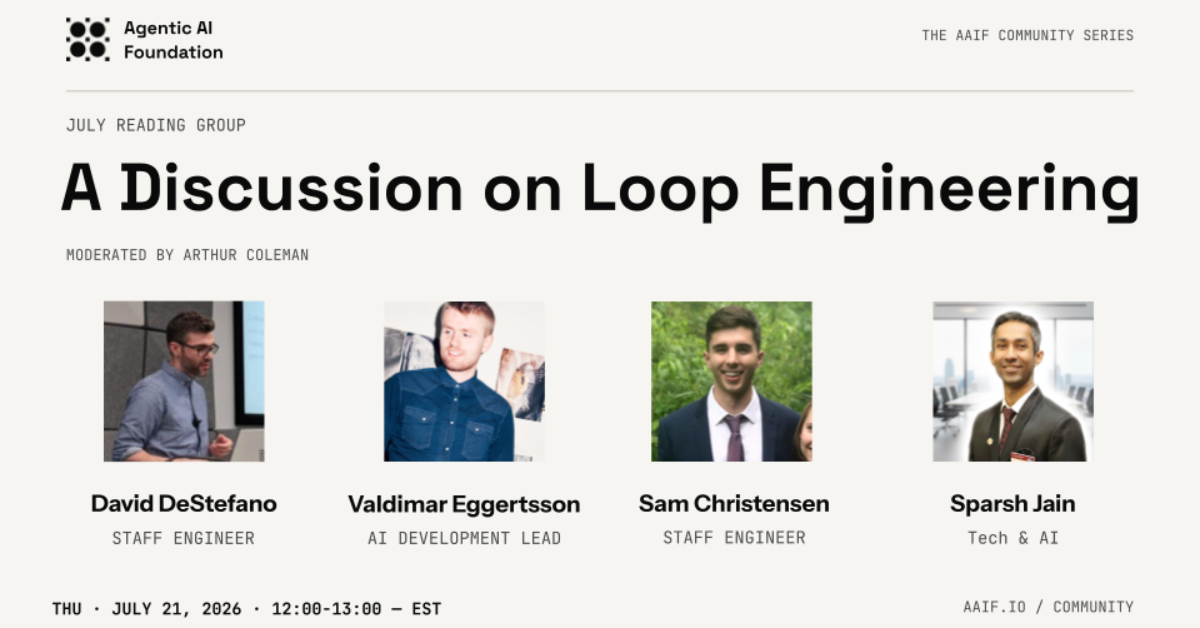
This month David DeStefano, Sam Christensen, and Valdimar Eggertsson will sit down for an hour and chat about some of their learnings and experiences exploring loop engineering. We'll also open it up to the audience, who may have their own experiences and insights we'd love to hear more from.