The agentic AI ecosystem is moving fast, and the best way to understand where it’s going is to see what builders are actually creating.
Join the AAIF community for a deep dive into the projects, tools, and systems shaping the next generation of agentic AI. From enterprise agents and AI coworkers to agent infrastructure, developer tooling, Kubernetes, security, verification, reliability, context, and new foundation-model applications, this showcase brings together builders tackling some of the most interesting challenges in the space.
AAIF members receive 20% off upcoming AAIF events and experiences, including opportunities like this to learn directly from leading builders, discover emerging projects and tools, and connect with the people shaping the agentic AI ecosystem.
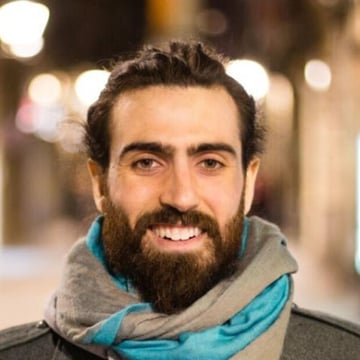
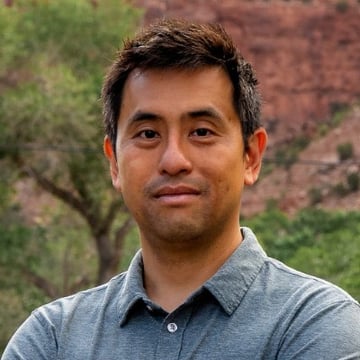
Hear from builders and leaders across Salesforce, Snowflake, GoDaddy, Diagrid, YugabyteDB, MintMCP, Veritas Automata, Block, Opaque Systems, and more.
Gerardo Lopez, DevOps at Veritas Automata, will explore Kagent & ADK and native Agent2Agent (A2A) AI agents on Kubernetes, showing how collaborative agent networks can be deployed, managed, and scaled as declarative Kubernetes resources using GitOps and kubectl, with RBAC guardrails and OpenTelemetry tracing.
Keith Perry, Principal Software Engineer at GoDaddy, will dive into sub-millisecond, offline agent verification with the Agent Name Service (ANS), exploring how agents can verify identity before credentials or other sensitive information change hands using tamper-evident receipts, status tokens, and cryptographic proofs tied to OAuth 2.0.
Jiquan Ngiam, Co-Founder & CEO of MintMCP, will share how his team is building infrastructure for AI coworkers: persistent agents that operate alongside teams in Slack and Teams with governed access to enterprise tools and data. He’ll demonstrate how MCP gateways, agent identities, scoped access, monitoring, guardrails, and memory can turn individual copilots into AI teammates.
Yaron Schneider, CTO of Diagrid, will explore how to build failure-proof agents that can survive timeouts, tool failures, restarts, and long-running workflows without starting over, while producing verifiable evidence of what they actually did. The session will cover durable execution, persistent state, retries, and cryptographic provenance for trustworthy agentic systems.
Bob Van Osten, VP of Product at Salesforce, will share how Salesforce is building and deploying agents for enterprise customers, including how its reasoning engine, open-source technologies, and protocols like MCP are being used to move agents from demos into real-world production.
Heather Downing, Developer Advocate at YugabyteDB, will showcase Meko, an agent-native context layer built on YugabyteDB that helps agents preserve conversations, memories, decision traces, knowledge, and artifacts. She’ll show how that context can be selected and shared between teammates and agents, improving handoffs and helping coding agents avoid rehashing decisions that have already been made.
Remy Thellier, Leading AI Partnerships at Snowflake, will explore the emerging frontier of tabular and relational foundation models and how zero- and few-shot prediction over enterprise data could become a reusable capability inside agentic workflows, while examining the current use cases, market direction, and limitations of these emerging models.
The Goose team will introduce the Goose Development Kit (GDK), a new SDK that lets developers embed the Goose agent directly into their own programs and use individual parts of the agent where they’re most useful. They’ll cover why GDK is being built, how to get started, and what developers can build with it.
Imran Siddique, Project Lead at AgenTrust, will explore what happens to the threat model when model weights leave your data center. His Weight Custody Manifest (WCM) project introduces an open specification and SDK built around signed manifests, attestation-gated key release, and wipe-on-lapse protections, with a focus on proving what systems can actually protect rather than simply trusting their claims.
Nikolay Dolgov, an independent AI/ML engineer and researcher, will examine why agent evaluations can stop being valid when the systems they measure encounter a different distribution in production. Using conformal prediction and a sim-to-real benchmark, he’ll show how a calibration that delivers 90% coverage under one distribution can fall to 9–15% under shift, and what this means for measuring reliability in real-world agent systems.
And there’s more to come as additional builders, companies, and projects join the showcase, bringing even more perspectives from across the ecosystem.
Forget the hype. Come see what people are actually shipping.
Get a firsthand look at innovative projects, hear the thinking and challenges behind them, discover tools and ideas you can experiment with yourself, and connect with the people building the infrastructure, applications, and systems that will shape where agentic AI goes next.
See what’s being built. Discover what’s next. Build with the community.