Everyone is talking about AI agents. But what happens when you actually put them to work?
What happens when agents start collaborating across systems, handling sensitive credentials, making decisions in enterprise environments, and operating for hours or days without someone watching over their shoulder? Suddenly, building an agent is the easy part.
The real challenge is making it work.
Join the Agentic AI Foundation (AAIF) for a closer look at what it takes to turn agentic AI from promising experiments into systems that can operate in the real world. We're bringing together the people building these technologies to share what they're working on, what they've learned, and some of the challenges they're trying to solve.
And the topics go well beyond another conversation about prompts and models.
What does it actually take to build agents that work?
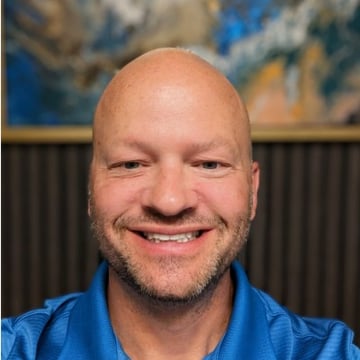
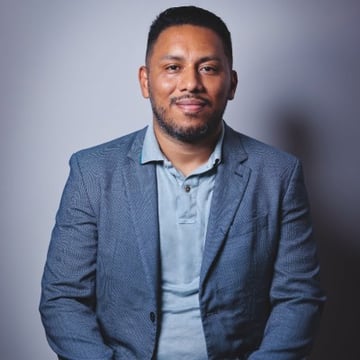
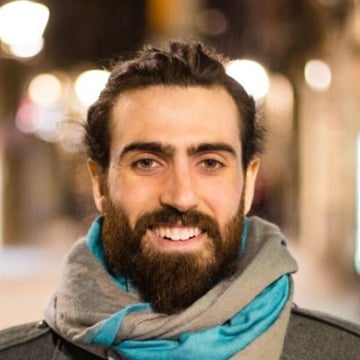
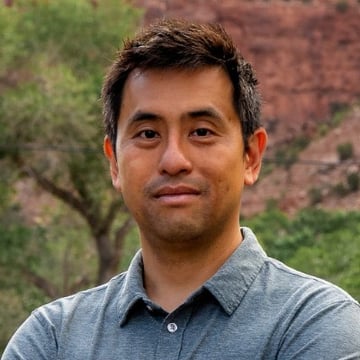
Bartosz Gonczarek (Vstorm) will take us somewhere unexpected: medical triage, where Agentic AI has reached 98% accuracy, exceeding an expert nurse panel. Gerardo Lopez (Veritas Automata) will show how collaborative AI agents can run natively on Kubernetes, using Kagent, Google ADK, and the A2A protocol. Meanwhile, Jiquan Ngiam (MintMCP) will explore the infrastructure behind AI coworkers that can work alongside teams, access enterprise tools, and retain context.
But what happens when things go wrong - or when you can't trust the other agent?
Yaron Schneider (Diagrid) will dig into building agents that survive failures, recover their state, and prove what they've actually done. Keith Perry (GoDaddy) will explore how agents can verify each other's identities in under a millisecond, even offline, before exchanging sensitive credentials.
And what does it take to make all of this work at enterprise scale?
Bob Van Osten (Salesforce) will share how Salesforce is building and deploying agents for real enterprise customers. Remy Thellier (Snowflake) will explore how tabular and relational foundation models could bring new predictive capabilities into agentic workflows. Imran Siddique (Opaque Systems) will tackle a different kind of security challenge: protecting model weights when they leave the environment where they were created.
And because getting agents into production is one thing, knowing whether they'll actually perform is another, Nikolay Dolgov (Independent AI/ML Engineer and Researcher) will challenge conventional evaluation assumptions, showing how a system calibrated for 90% coverage can fall to just 9–15% under distribution shift.
Different perspectives, different technologies, and very different challenges - all connected by one question:
What does it really take to build AI agents you can trust in the real world?
Come for the technical insights, stay for the ideas, and leave with a better understanding of where agentic AI is heading - straight from the people building it.
Less speculation. More engineering. More things worth learning from.