
The Myth of AI Breakthroughs
Speakers

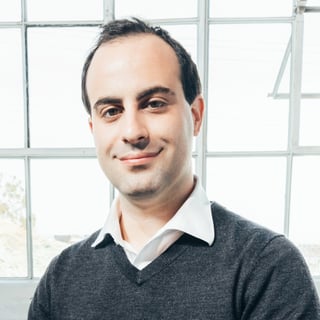
Jonathan Frankle is Chief Scientist (Neural Networks) at Databricks, where he leads the research team toward the goal of developing more efficient algorithms for training neural networks. He arrived via Databricks’ $1.3B acquisition of MosaicML as part of the founding team. He recently completed his PhD at MIT, where he empirically studied deep learning with Prof. Michael Carbin, specifically the properties of sparse networks that allow them to train effectively (his "Lottery Ticket Hypothesis" - ICLR 2019 Best Paper). In addition to his technical work, he is actively involved in policymaking around challenges related to machine learning. He earned his BSE and MSE in computer science at Princeton and has previously spent time at Google Brain and Facebook AI Research as an intern and Georgetown Law as an Adjunct Professor of Law.

Denny Lee is a long-time Apache Spark™ and MLflow contributor, Unity Catalog and Delta Lake maintainer, and a Product Management Director at Databricks. He is a hands-on distributed systems and data sciences engineer with extensive experience developing internet-scale data platforms and predictive analytics and AI systems. He has previously built enterprise DW/BI and big data systems at Microsoft, including Azure Cosmos DB, Project Isotope (HDInsight), and SQL Server. He was also the Senior Director of Data Sciences Engineering at SAP Concur. He also has a Masters of Biomedical Informatics from Oregon Health and Sciences University and has implemented powerful data solutions for enterprise Healthcare customers. His current technical focuses include AI, Distributed Systems, Delta Lake, Apache Spark, Deep Learning, Machine Learning, and Genomics.

At the moment Demetrios is immersing himself in Machine Learning by interviewing experts from around the world in the weekly MLOps.community meetups. Demetrios is constantly learning and engaging in new activities to get uncomfortable and learn from his mistakes. He tries to bring creativity into every aspect of his life, whether that be analyzing the best paths forward, overcoming obstacles, or building lego houses with his daughter.
SUMMARY
Jonathan takes us behind the scenes of the rigorous work they undertake to test new knowledge in AI and to create effective and efficient model training tools. With a knack for cutting through the hype, Jonathan focuses on the realities and usefulness of AI and its application.
We delve into issues such as face recognition systems, the 'lottery ticket hypothesis,' and robust decision-making protocols for training models. Our discussion extends into Jonathan's interesting move into the world of law as an adjunct professor, the need for healthy scientific discourse, his experience with GPUs, and the amusing claim of a revolutionary algorithm called Qstar.